India's Strategic Partnership with Russia Under Scrutiny
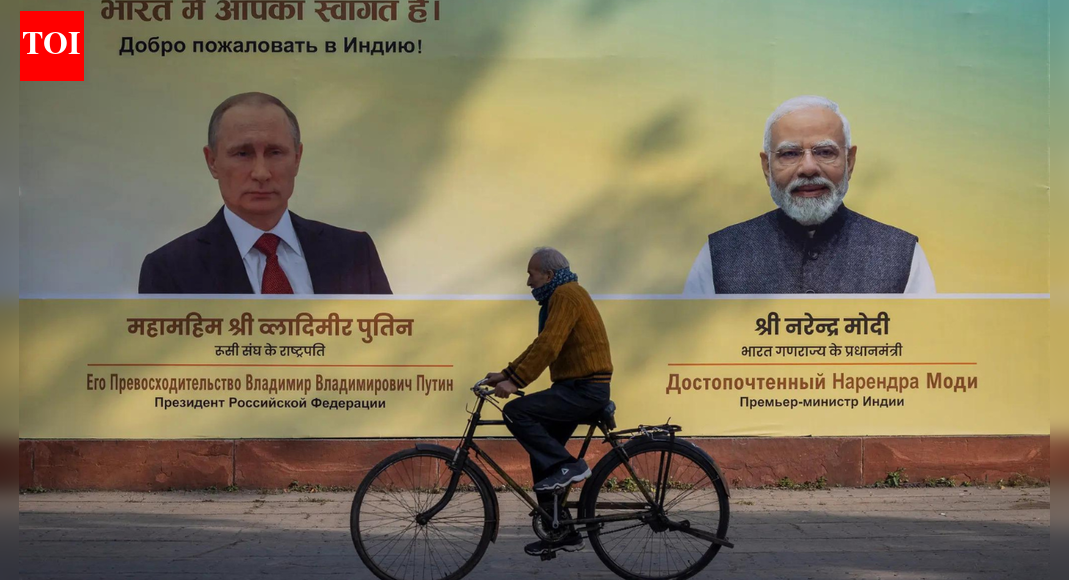
As Russia faces increasing isolation and sanctions from the West, it is turning to India to maintain vital economic and strategic ties. President Vladimir Putin's recent summit with Prime Minister Narendra Modi highlights the importance of this relationship, even as India navigates a complex geopolitical landscape.
Why This Matters
Russia needs India to continue purchasing its oil and arms, preventing a complete shift towards Western or Chinese alliances. Prime Minister Modi seeks assurances regarding energy stability, reliable defense supplies, and Russia's geopolitical neutrality, all while carefully managing relations with the United States.
The Fragile Oil Lifeline
India has significantly increased its crude oil imports from Russia since early 2022, briefly surpassing China as Moscow's largest customer. However, new U.S. sanctions on Russian firms are impacting Indian refiners, leading to a decrease in imports.
- In early 2022, India bought just 2% of its crude oil from Russia.
- Currently, India sources 35-40% of its crude oil from Russia.
- Imports are expected to hit a 3-year low in December due to sanctions.
Trade Imbalance
There is a significant trade imbalance between India and Russia, creating economic challenges.
| Category | Value |
|---|---|
| Imports from Russia | $63.8 billion (mainly crude oil, fertilizers, and coal) |
| Exports to Russia | Less than $5 billion (pharma, food, machinery, and electronics) |
Sanctioned Russian banks also face difficulties in repatriating dividends from Indian joint ventures.
Defense Cooperation: Evolving Dynamics
While Russia remains a key defense partner, India is diversifying its sources and promoting domestic production.
- Russia's share of India's defense imports has decreased from 70% to 36% in the last decade.
- India is acquiring defense equipment from France and the U.S., and emphasizing "Make in India" initiatives.
- Despite diversification, India signed a $248 million deal this year to upgrade its Russian T-72 tank engines.
- Talks are ongoing for Su-57 fighters and additional S-400 air defense systems.
- Joint ventures like BrahMos missiles and AK-203 rifles continue to be important.
The Trump Factor and Trade Friction
Former President Trump imposed tariffs on Indian goods, citing oil imports from Russia as a concern. The U.S. administration has labeled India's oil strategy a "security problem," but negotiations for a limited trade deal are underway.
India's Key Objectives
During the summit, Prime Minister Modi likely sought assurances from President Putin on several key issues:
- Trade Rebalancing: Encouraging Russia to import more Indian goods.
- Secure Payment Systems: Establishing reliable local-currency arrangements.
- Energy and Nuclear Cooperation: Securing commitments on oil volumes, pricing, and nuclear energy projects.
- Geopolitical Neutrality: Ensuring Russia's ties with China do not negatively impact Indian interests.
Looking Ahead
Future developments to watch include:
- New defense contracts and S-400 delivery schedules.
- Updates to rupee-rouble frameworks or BRICS-based payment systems.
- Expanded use of RELOS for logistics and energy transit.
- A joint statement reaffirming the "strategic partnership."
The Bottom Line
India's relationship with Russia allows it to maintain strategic autonomy and provides bargaining power with both China and the United States, showcasing its growing role in a multipolar world.