Election Commission Responds to Claims of Voter Disenfranchisement
The Election Commission (EC) has filed an affidavit in the Supreme Court, strongly defending its Special Intensive Revision (SIR) of electoral rolls. The EC refuted allegations of mass deletion of genuine voters, dismissing them as "highly exaggerated, speculative, and politically motivated."
EC's Response to Allegations
In an 81-page counter-affidavit, filed in response to a petition by TMC MP Dola Sen and others, the EC addressed concerns about the revision process. The poll panel stated that narratives alleging widespread disenfranchisement, particularly in West Bengal, were being "amplified to serve vested political interests."
Pawan Diwan, the secretary of the Election Commission, requested the dismissal of the petitions against the SIR. The EC maintains that its actions are constitutional and aimed at maintaining the integrity of electoral rolls.
Constitutional Basis for Revision
The Election Commission asserted that its powers to conduct such revisions are firmly rooted in the Constitution and relevant laws. These include:
- Articles 324 and 326 of the Constitution
- The Representation of the People Act, 1950
- The Registration of Electors Rules
The EC emphasized that Article 324 grants it the authority to oversee the preparation of electoral rolls for elections to Parliament and state legislatures.
Emphasis on Cooperative Process
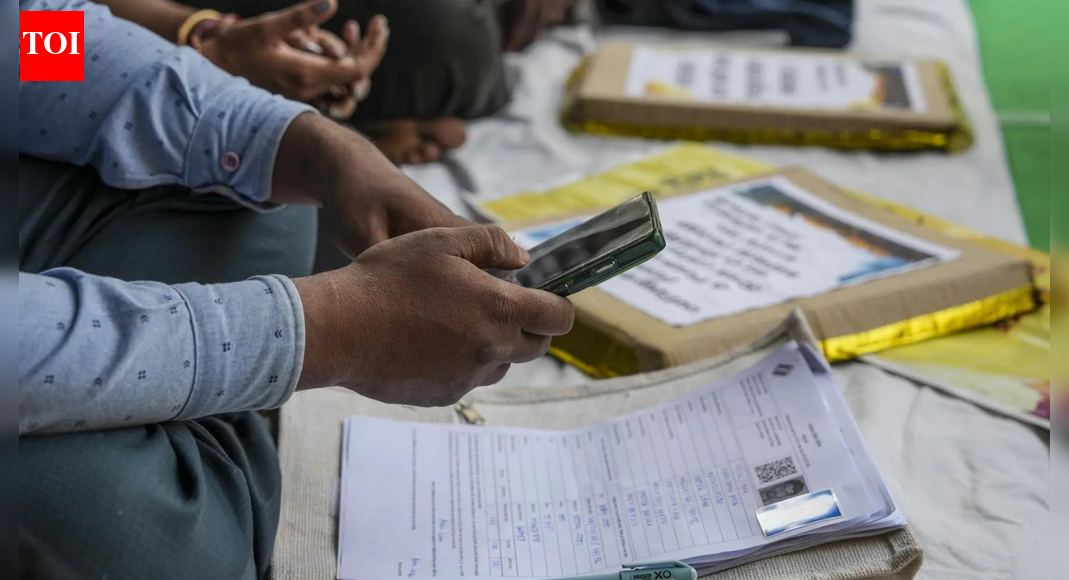
The EC also highlighted that the preparation and revision of electoral rolls is a collaborative effort. It clarified that only electors unable to verify their eligibility from the last nationwide SIR (conducted in 2002) are required to complete enumeration forms and potentially submit supporting documents.
The affidavit stated that eligibility based on citizenship, age, residency, and absence of disqualification (as per Article 326) is presumed unless evidence suggests otherwise. Therefore, claims of arbitrary classification or violations of Article 14 were deemed "misconceived."
Objective of the SIR Exercise
The Election Commission stated that the SIR exercise aims to improve the integrity of elections by removing ineligible individuals from the electoral rolls. The right to vote is derived from Article 326, Sections 16 and 19 of the RP Act 1950, and Section 62 of the RP Act 1951.
Court's Response and Nationwide Implementation
The court had previously sought responses from the EC regarding pleas filed by various political parties concerning the SIR exercise in Tamil Nadu and West Bengal.
The pan-India SIR was initiated with an order on June 24, starting in Bihar. Phase II, encompassing 12 states including Tamil Nadu, West Bengal, and Uttar Pradesh, began following a subsequent order on October 27.
The EC concluded by stating its commitment to ensuring the successful implementation of the SIR exercise and ensuring that no eligible voter is excluded from the electoral rolls, dismissing concerns as "highly speculative and exaggerated."