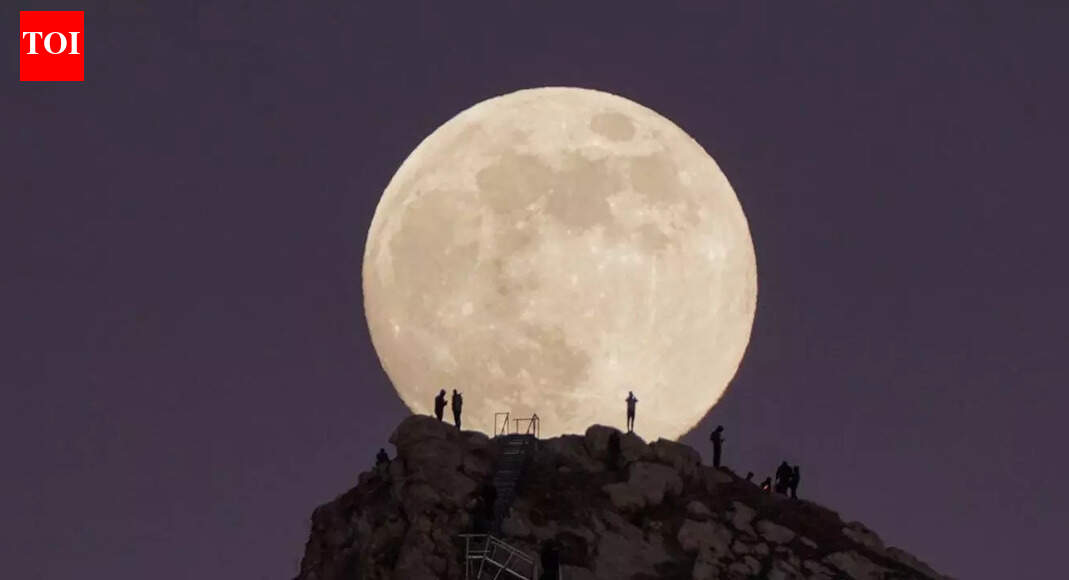
December 2025 Cold Moon: A Supermoon Spectacle
Get ready for a stunning celestial event! The December 2025 Cold Moon, a supermoon, will be exceptionally large and bright. It will reach its highest point in the Northern Hemisphere sky, offering a breathtaking view for skywatchers. This phenomenon, also known as the Long Nights Moon, happens when the full moon coincides with perigee, its closest approach to Earth.
Understanding the Cold Moon
The full moon in December is traditionally called the Cold Moon because it occurs during the chilliest nights of the year in the Northern Hemisphere. Historically, it's also known as the Long Nights Moon or the Moon Before Yule, referencing the old English term for the winter festival.
Why It's a Supermoon
A supermoon happens when a full moon coincides with the moon’s perigee, the closest point in its elliptical orbit around Earth. At perigee, the moon appears larger and brighter than usual. In December 2025, the Cold Moon will reach full illumination just 12 hours after perigee.
Timing and Visibility
Forbes reports that in 2025, the Cold Moon will reach full illumination at 8:20 a.m. EST on Thursday, December 4th. Although technically full at this time, the moon will appear fully visible the night before and the night after.
For observers in North America, the most impressive view will be at moonrise, when the moon emerges on the eastern horizon shortly after sunset on Friday, December 5th.
Supermoon Size and Distance
The Cold Moon will be approximately 221,965 miles (357,218 kilometers) from Earth, compared to the average lunar distance of 238,900 miles (384,472 kilometers). This makes it the second-closest full moon of 2025, enhancing its size and brightness.
While a supermoon is only about 10% closer than the average moon, this slight difference significantly impacts its visual prominence, especially when viewed at moonrise near the horizon.
Why It Appears Higher in the Sky
December’s Cold Moon will also appear higher in the sky than any other full moon in the Northern Hemisphere. This is because the full moon always rises opposite the sun. With the winter solstice on December 21st, the sun is at its lowest point, causing the moon to climb to a height rarely seen during other full moons.
Best Viewing Locations and Times
To fully appreciate the Cold Supermoon, find unobstructed locations with a clear view of the eastern horizon. Ideal spots include:
- Coastlines facing east
- Elevated fields
- Open spaces free from tall buildings and trees
Sample Moonrise Times (December 5, 2025):
| Location | Sunset | Moonrise |
|---|---|---|
| New York | 4:29 pm EST | 4:56 pm EST |
| Los Angeles | 4:43 pm PST | 5:27 pm PST |
For precise timing in your local area, use a moonrise calculator to catch the Cold Moon at its peak visual impact.
The Moon Illusion
The phenomenon where the moon looks unusually large near the horizon is called the moon illusion. Objects on the horizon, such as trees, buildings, and mountains, create a visual reference that tricks the human brain into perceiving the moon as larger.
Looking Ahead
The December Cold Moon is the final full moon of 2025, concluding a year with notable lunar events. The sequence of supermoons continues into 2026, with the Wolf Moon on January 3, 2026.
Tips for Watching the Cold Supermoon
- Choose the right location: Seek an open space with a clear view of the eastern horizon.
- Check local moonrise times: Use a moonrise calculator to know the precise moment for your area.
- Time your observation: The best visual impact occurs when the moon first appears above the horizon.
- Bring equipment if desired: A camera with a zoom lens or binoculars can enhance the experience.
- Dress warmly and prepare for night viewing: December nights are cold, so wear appropriate clothing.
Following these tips ensures you experience the Cold Supermoon at its brightest, largest, and most dramatic!